Packaging Best Practices for Shipping Battery-Powered Medical Devices Safely

Shipping battery-powered medical devices requires strict handling, packaging, and labeling practices to ensure safety and regulatory compliance. Failure to meet these requirements can result in shipment delays, fines, or rejection. However, these requirements may vary depending on the type of medical device, battery type and setup (built-in, packed with equipment, or shipped separately), quantity of batteries, transportation method (air, ground, or sea), and origin- and destination-country regulations.

To navigate this complexity, manufacturers usually coordinate with dangerous goods and logistics providers, specialty packaging suppliers, and transportation carriers. This ensures that shipments are properly prepared and handled during transit and are compliant with relevant transport regulations.

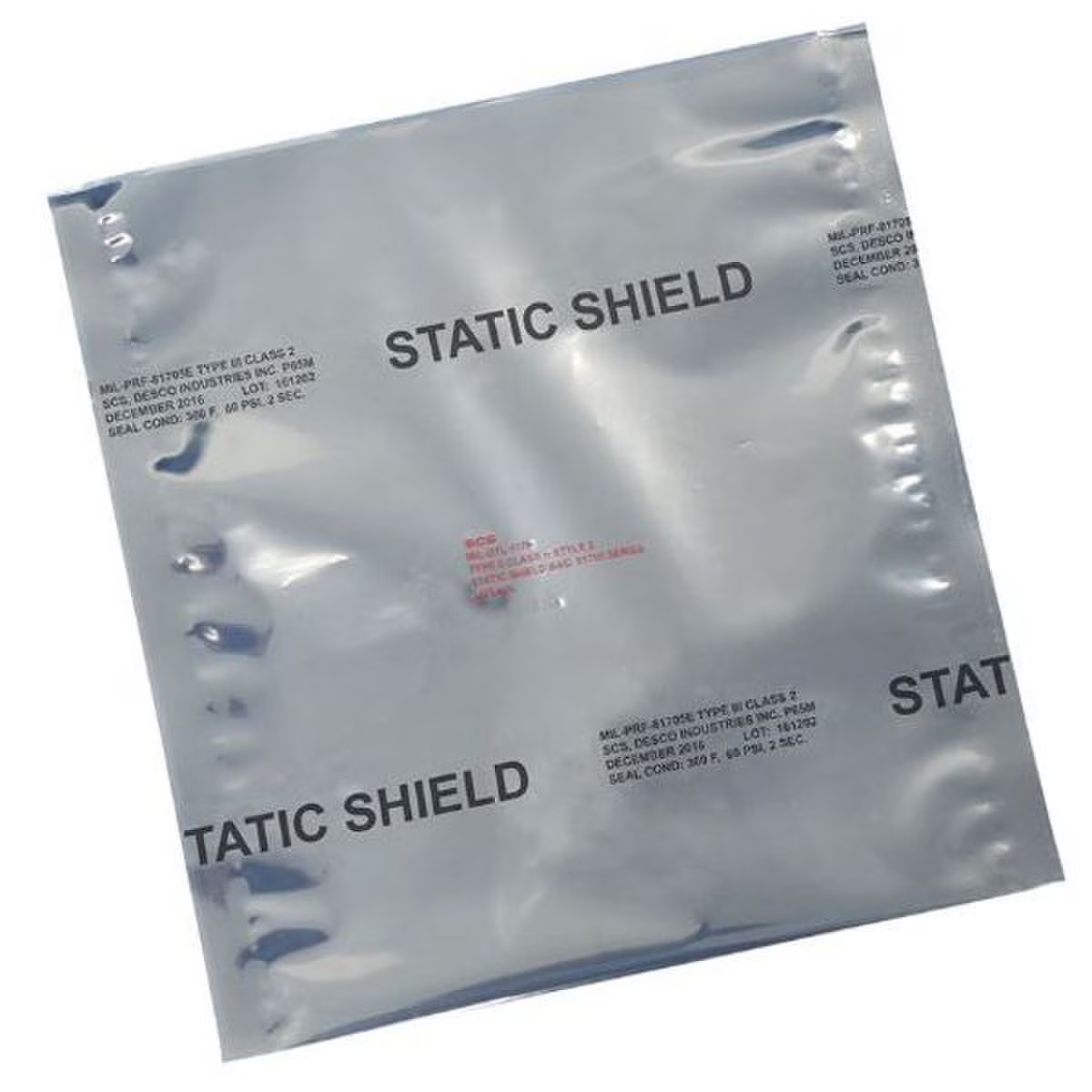
Moisture-Barrier Bags vs Static-Shielding Bags: What’s the Difference?

A component may look properly packaged, with a plastic bag seemingly covering the whole item. But the wrong type of bag will expose it to static discharge, moisture, or both. If you ship sensitive electronics, static-shielding bags and moisture-barrier bags offer adequate protection for your items. The difference is that each bag solves a specific packaging problem.

Static-shielding bags focus on electrostatic discharge (ESD). Meanwhile, you use moisture-barrier bags to prevent water vapor buildup. However, these two qualities may overlap, as some bags offer both ESD control and moisture prevention.

Aerospace, defense, and electronics applications often require packaging that addresses both ESD and moisture risks. For example, many military barrier materials are ESD protective and water-vapor-proof.

If you need such materials for your packaging, Correct Products is a reliable source of ESD bags, static-shielding bags, ESD moisture-barrier bags, and dry packaging materials.

How to Ship Military and Aerospace Electronics Without ESD Damage

Military and aerospace electronics are vulnerable not only to drops and rough handling but also to environmental factors. Among these risks, electrostatic discharge (ESD) is a major concern. The National Aeronautics and Space Administration (NASA) treats ESD as a key risk in its operations mainly because it is difficult to detect right away, with damage that may not become apparent until later during critical operations. This risk especially matters when shipments contain sensitive components used in defense systems.

You need a sound shipping plan when handling military and aerospace electronics. The process starts with identifying the correct packaging conditions, with thoughtful consideration of cushioning and moisture prevention. Correct Products supports this process with a wide range of ESD shipping materials.

ESD Foam vs. ESD Bubble Wrap: Cost, Protection, and Use Cases

Fragile shipments live and die on the quality of the packaging. When there’s always the threat of electrostatic discharge (ESD) frying your circuits or excessive weight crushing your chips, the packaging material you use is not something to take lightly. That is why the ESD foam vs ESD bubble wrap question matters when shipping or storing electronics.

Both ESD foam and bubble wrap provide effective ESD protection. But each has a different way of doing it. One offers strong structural preservation, while the other gives the cushioning you need at a lower price.

This guide looks at each material’s strengths, differences, and safety levels. It also suggests the best use cases for each material. Correct Products has been matching buyers with the right ESD packaging materials for their products for years, and each time, the choice comes down to a few simple considerations.

ESD (Electrostatic Discharge) Bags: The Right Packaging for Sensitive Products

When electronic products require utmost care, you need the right container to keep them protected. This is especially true for components sensitive to electrostatic discharge (ESD). For items such as electronic parts, chips, circuits, and transistors, ESD bags and other ESD packaging are most effective for keeping them safe and static-free.

If you’re reading this, you’re probably looking into what ESD bags do exactly.  This article serves as a guide on what they are and how they can protect electronic products.

How to set up an ESD Workstation

Last Updated: February 2026

Electrostatic discharge (ESD) remains one of the most costly and preventable threats in electronics manufacturing. Even a tiny, invisible discharge can damage sensitive components, compromise reliability, and trigger expensive failures downstream. That’s why setting up an ESD workstation isn’t just about compliance, but protecting product yields, safeguarding profitability, and maintaining customer trust.

In this article, we outline the steps to set up a basic ESD workstation and highlight the essential products that make up a static-safe environment. Not every application requires the same level of protection, but whether you’re building a small bench setup or a fully integrated electrostatic protected area, the building blocks remain the same.

You’ll also find a free ESD Workstation Setup Checklist to download, plus many additional ESD products to enhance the sophistication, safety, and profitability of your program. Let’s get started.

Innovations in ESD Packaging Materials

Even a quick static shock can damage microchips,  circuit boards, and other sensitive electronic parts. If your business deals with electronics, this issue can cost time and money. That’s why strong, reliable electrostatic discharge (ESD) packaging isn’t optional—it’s a must.

Devices are becoming smaller, parts are more delicate, and expectations are higher. Companies across industries now rely on smarter ESD packaging to keep products safe through handling, storage, and shipping.

Biofit ESD Chairs: Enhance Workplace Safety and Comfort

Using Biofit ESD Chairs to Improve Safety and Efficiency in Your Workspace

With all the electronics in modern workplaces, managing static electricity is more important than ever. A single static spark can damage fragile components like microchips, costing you time and money. That’s why having proper static control procedures in place is a must. ESD chairs present one easy way to protect your equipment and keep your operations running smoothly.

ESD Floor Wax: Take Advantage of the Holiday Downtime to Boost Your Production Area’s Safety and Efficiency

Keep Your Facility Safe with ESD Floor Wax: A Complete Guide During Holiday Downtime

Static electricity can cause serious damage to electronic parts, so keeping your workplace safe from electrostatic discharge (ESD) is a must. The holiday season is a great time to tackle this. Use the downtime to apply or refresh ESD floor wax in your facility. It’s a smart way to boost your static control plan while avoiding interruptions to regular work.

Benefits and Uses of Security Carts in the Workplace

Much is said about the importance of data security, but securing physical items is just as critical. Noncash asset misappropriations, such as inventory theft, can harm your business’s bottom line and cause work to grind to a halt.

Security carts provide an effective inventory, material, and equipment storage solution for the healthcare, financial, manufacturing, retail, warehousing, automotive, and government (aerospace and defense) sectors. They can transport sensitive electronics as well as inventory and tools. We’ll explain the benefits of security carts and how they can increase safety, improve workflow, and more.