

When electronic products require utmost care, you need the right container to keep them protected. This is especially true for components sensitive to electrostatic discharge (ESD). For items such as electronic parts, chips, circuits, and transistors, ESD bags and other ESD packaging are most effective for keeping them safe and static-free.
If you’re reading this, you’re probably looking into what ESD bags do exactly. This article serves as a guide on what they are and how they can protect electronic products.
What Is ESD?
ESD is the sudden movement of electrical energy between two objects that have different electrical charges. It’s the sudden shock you feel when you hold a doorknob in a carpeted room.
Even a discharge too low for humans to feel can already be harmful to electronic components. Modern devices have circuits and chips that operate at extremely low voltages. An ESD spike is enough to cause problems for these devices.
ESD is produced in many ways. When two materials rub together, they build up a charge; so does pulling materials apart. A charged object can also pass near metal and transfer energy without even touching it.
Some environments are more likely to cause ESD. For example, a room full of dry air makes it easier for ESD to build up.
According to the ESD Association, electrostatic discharge is one of the leading causes of electronic device failures in manufacturing and handling. It’s estimated that ESD-related issues account for up to 33% of all electronic product losses. That’s why it’s important to use ESD packaging when handling sensitive products.
How an ESD Spark Ruins Your Electronic Parts
Electronic parts like microchips work at very small scales. They move tiny amounts of electricity to do their jobs. When static from the outside enters the system, it sends a jolt of energy that can exceed the parts’ capacity. If not prevented, this causes damage to the parts.
Sometimes the damage is obvious. A RAM stick might stop working the moment it’s installed. A control board fails to turn on. You can trace these failures back to how these items were handled before installation.
There are times when the damage is not noticeable. A static hit weakens a trace or chip just enough that the device still passes inspection. Weeks later, the customer starts seeing random crashes, faulty sensor readings, or slow performance that comes and goes.
ESD Bags Are the Answer
An effective ESD system for your work area starts with the packaging. ESD bags are at the frontline, directly protecting your electronic products as you transport them from the factory to warehouses, stores, and, eventually, to customers. Packaging is crucial because it stays with the product through every step.
Unlike regular packaging, ESD bags use materials that help prevent static buildup. These bags provide a safe way for static to dissipate, away from the item inside.
Most ESD packaging falls into these main groups:
- Shielding bags block external electric fields and sudden discharges, which are essential during shipping.
- Anti-static bags reduce the risk of static buildup.
- Conductive bags let static move across the surface and into the ground, preventing dangerous buildup.
In addition to bags, you can use ESD foam, wrist straps, and ESD mats to control static within the workspace. Explore these options by browsing Correct Products’ ESD packaging and bag categories, including its selection of black conductive bags.
How Do ESD Bags Work?
A misconception is that ESD packaging traps static or creates a barrier that it can’t penetrate. What it does is simply manage the buildup and flow of static so that it stays within levels that the item inside can handle.
Anti-static materials help reduce the chance that the bag itself will create a charge when it rubs against another surface. Think of them as “low-friction” for electricity. They help prevent static from forming in the first place, lowering the risk before a part ever goes inside.
Conductive and shielding materials take the next step. These materials give electricity a place to go. If a charge lands on the surface of the bag, it spreads out across the material instead of piling up in one spot. From there, it moves safely into the surrounding environment or a grounded surface. This is called dissipation.
Metalized shielding bags provide another layer of protection through what is called the Faraday Cage effect. The thin metal layer inside the bag acts like a shell. When an external electrical field hits it, the energy spreads around the outside of the bag rather than passing through to the item inside.
Manufacturers check bag performance by looking at how easily electricity moves across the surface and how well the bag blocks outside charge.
- Surface resistivity describes how easily electricity moves across the bag’s surface.
- Lower values mean charges spread out faster.
- Shielding effectiveness refers to how much outside electrical energy the bag can block from reaching the contents.
If you picture a typical shielding bag in layers, it often looks like an inner anti-static layer that touches the part, a metalized middle layer that blocks outside fields, and an outer layer that helps control how static moves across the surface.
An ESD Bag for Your Every Need
Each type of ESD bag handles static in a different way. The right bag depends on what you’re protecting.

Pink anti-static bags are your entry-level bags. With these bags, the chance of creating a static charge is lower. They work well for short-term storage and inside controlled work areas.
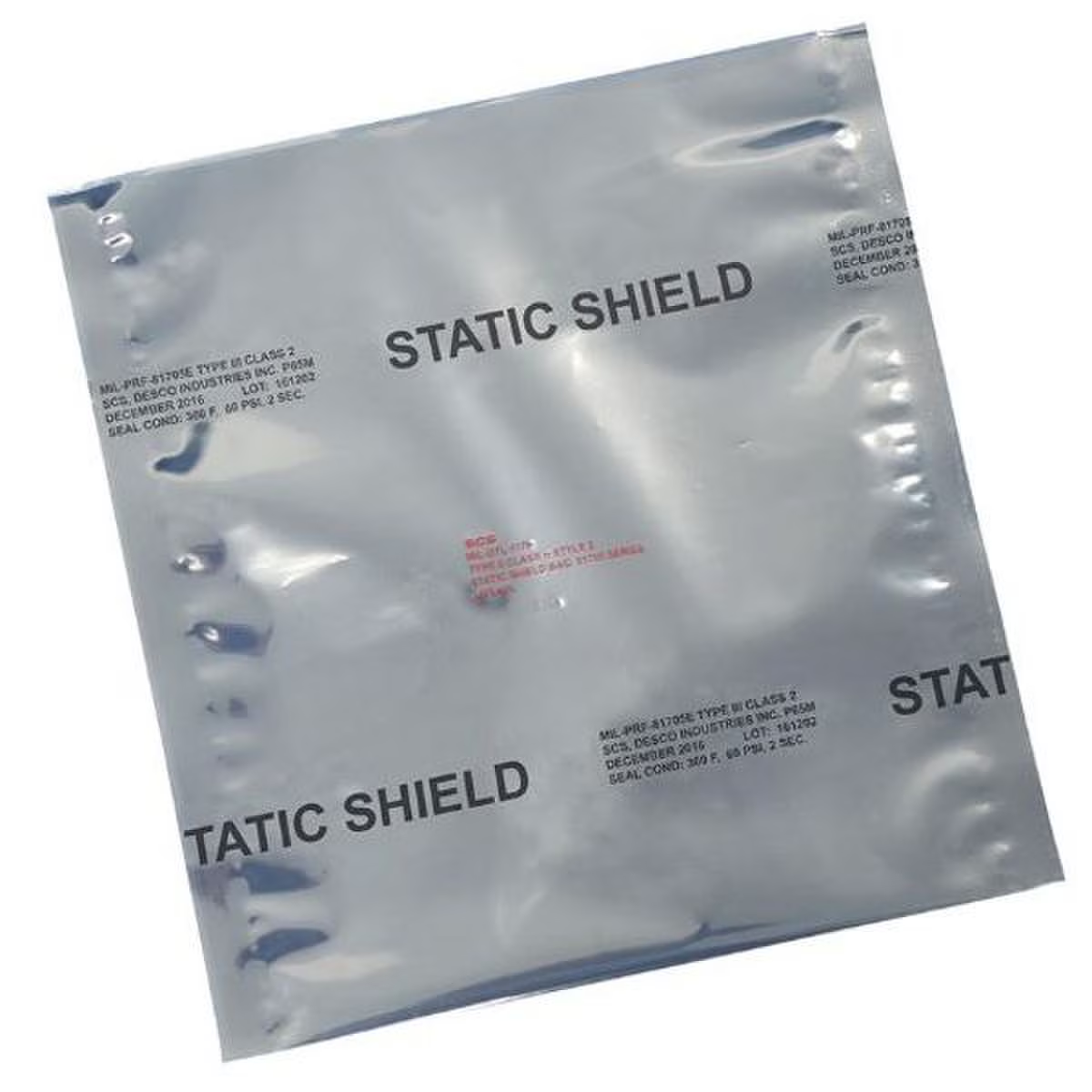
Metalized shielding provides more protection. These bags have a thin metal layer that redirects outside electrical energy around the bag. Use these bags when shipping items that travel through areas with a high risk of static, such as warehouses and sorting systems.
Black conductive bags are designed to quickly dissipate static. The material includes conductive elements that allow static to spread across the bag’s surface and flow into grounded systems. This makes them an excellent choice for storage racks and workstations.

Other bag types meet more specific needs. Ziplock ESD bags, for example, add convenience for handling items that go in and out of their packaging during testing. Meanwhile, moisture-barrier bags combine static control with protection against humidity.
When choosing between these types, these are considerations you should think of:
- How sensitive the part is
- How far will it travel
- What kind of static control exists in the spaces it will pass through
When in doubt, contact and consult the Correct Products team for the right bag and packaging to use.
Environments for ESD Bags
You will find ESD bags in almost every place where electronic parts change hands. On manufacturing lines, components move from one station to the next. In rework and repair shops, technicians pull parts in and out of systems all the time. In shipping areas, workers send items through dry air, belts, and plastic totes on their way to the customer.
Common items that benefit from ESD protection include memory modules, CPUs, PC motherboards, sensor boards, and circuits. You also use ESD bags for finished devices when they go in for testing or repair.
Protecting Electronics With the Right ESD Packaging From Correct Products
Static can damage your products without you knowing. When you use the right ESD bag for your electronic products, you’re maintaining the quality at every step, from assembly to shipping. It is one of the simplest upgrades you can make to protect your items.
The good news is that there are many packaging solutions available to prevent static. Start by checking out the ESD packaging options available from Correct Products, a leading provider of ESD bags, including black conductive bags and other protective materials.

You must be logged in to post a comment.